

Companies exporting to the United States must have an FDA REGISTRATION NUMBER
Simply ask for an invoice
Free Shipping
Fast Quote, Fast Email Responses
Are you ready for deals?
T: +1 855 510 2240
T: +1 855 389 7344
T: +44 800 610 1577
itbholdings | Skype
info@itbhdg.com
Click on the right and
Chat with us for
Live Support
or send us an email
Monday - Sunday
3:00 AM - 6:00 PM
Eastern Standard Time.



Cacao | Cocoa | kakao | κακάο | cacau | カカオ | 可可 | 카카오 열매 | कोको | الكاكاو
MARKET PRICES ON 1/3/2020
FARMGATE PRICE | 2019/20 Cocoa Season
■ 825 CFA Francs ($1.40) per kg - $1,400 per MT - Ivory Coast
■ 8,240 Ghanaian Cedi per MT - $1,443 per MT - Ghana
Ivory Coast and Ghana, which produce roughly 60% of the world's cocoa, plan to harmonize their marketing systems and strategies, coordinate bean sales, and their farmers' price. Ivory Coast, the biggest grower, was forced to cut the price for its estimated 800,000 farmers by more than a third the previous season.
European Union and Japan trade agreement is welcomed by the European Cocoa Association (ECA) because removal of tariffs will open cocoa exports to 127 million consumers, and results in savings of $1.17 Billion in duties paid annually by E.U companies.
$2,453
IVORY COAST : $ - TBD
ECUADOR ASS : $ - TBD
ECUADOR ASSS : $ - TBD
GHANA : $ - TBD
Cost, Insurance, Freight - CIF
Hamburg | Amsterdam | Antwerp
| Cocoa Merchants Association of America, Inc - CMAA WEEKLY COCOA PRICES |
||
| PRICE | ||
| Main Crop Ghana, Grade I | TBD | |
| Main Crop Ivory Coast, Grade I | TBD | |
| Main Crop Nigerian, Grade 1 | TBD | |
| Ecuador | TBD | |
| Sanchez f.a.q | TBD | |
| PPP Natural African Cocoa Butter | TBD | |
| Cocoa Press Cake - Natural 10/12% Butterfat | TBD | |
Cocoa beans and cocoa products of regular commercial quality that meet FDA and all other regulatory agencies’ requirements, and physically deliverable in truckload quantities, ex dock or ex warehouse U.S. Eastern Seaboard. Prices are in U.S. Dollars per metric ton.
Best CIF Prices
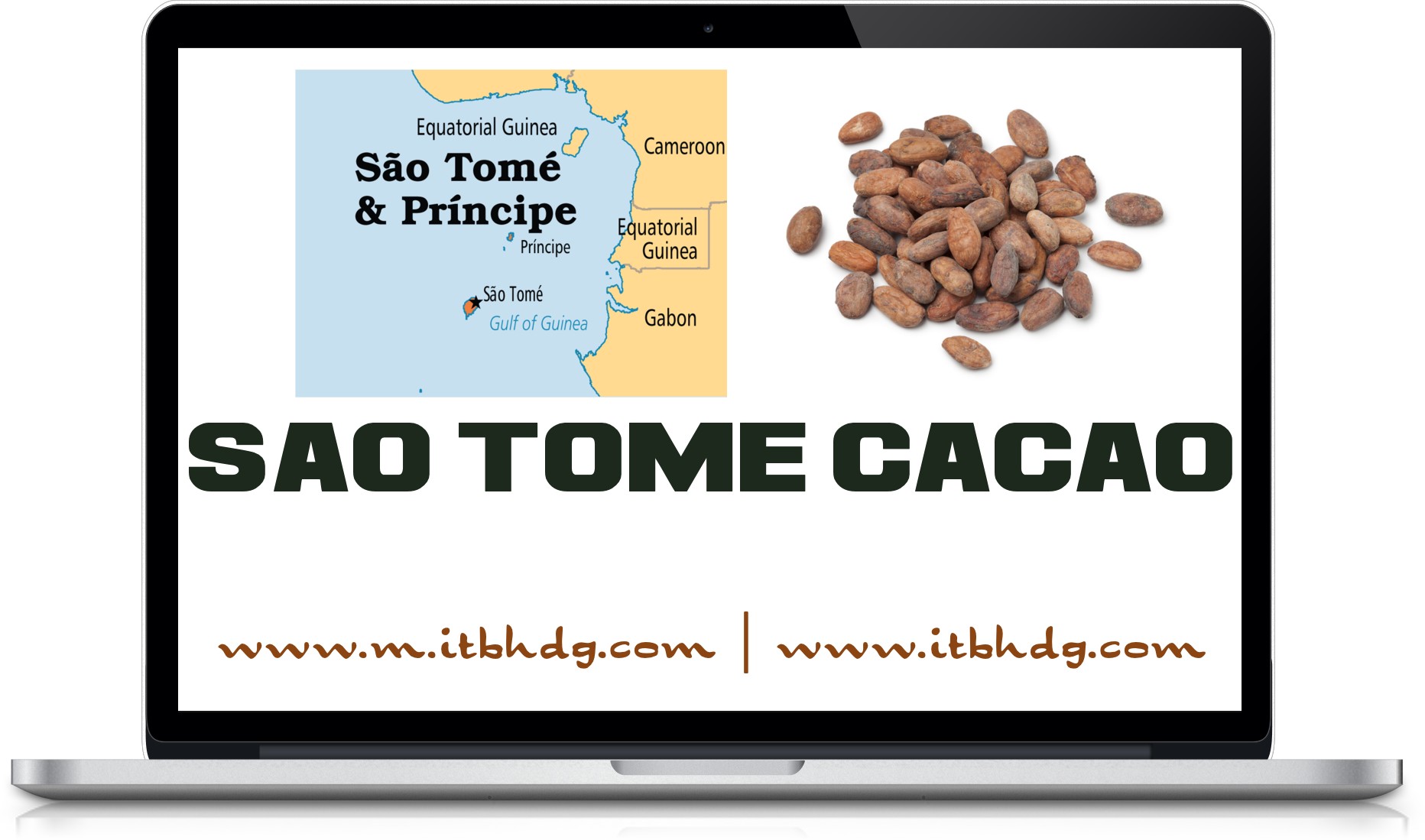
Sao Tome and Principe Cacao Beans
Free shipping
About 15,500 metric tons of certified organic cocoa beans are sourced from the following countries :
Madagascar, Tanzania, Uganda, Belize, Bolivia, Brazil, Costa Rica, Dominican Republic, El Salvador, Mexico, Nicaragua, Panama, Peru, Venezuela, Fiji, India, Sri Lanka, Vanuatu, Ghana.
FOOD STARTUPS, CHOCOLATE MASTERS, BAKERS, CHEFS, RESTAURANTS, SPECIALTY STORES can now enjoy
Sao Tome and Principe organic cacao or conventional beans at the best prices, right here.
Cocoa beans are the main product group imported from developing countries (64%), followed by cocoa butter, fat and oil (19%) and cocoa paste (14%). Cocoa butter, fat and oil saw the highest annual growth (14%).

FOOD STARTUPS, CHOCOLATE MASTERS, BAKERS
SPECIALTY STORES SHOP HERE
If you are a Maître Chocolatier - Chocolate Master or
owner of a Specialty Store, you may not need to import several
metric tons of certified organic cocoa beans per order.
You have the option of buying a jute bag or pallet - most economical for Food Startups, Chefs, Specialty Stores, Chocolate Masters, Dietary Supplements - at reasonable prices.
Quotes, answers to your inquiries are usually provided within hours, not days. Prices are subject to change any time.
Peru Organic Cacao | Wholesale
Dominican Republic Organic Cacao | Wholesale
Uganda Organic Cacao | Wholesale
São Tomé and Príncipe Cacao | Wholesale
Organic Natural Cacao Powder | Wholesale
Ghana Organic Cacao | Wholesale
Cacao beans with unique aromas
specialty, gourmet or fine flavor cacao
Peru Marañón Fortunato No 4
Peru Norandino | Peru Piura Blanco
DR Congo Mountains of the Moon
Colombia Arauquita | Colombia Tumaco Hartón Pacifico
Nicaragua Xoco Chuno
Costa Rica Nahua | Guatemala Xoco Rio Dulce
Honduras Xoco Mayan Red | Brazil Fazenda Camboa
Haiti PISA | Trinidad and Tobago
Dominican Republic Öko Caribe
Vietnam Puratos | Madagascar Sambirano
Tanzania Kokoa Kamili | Colombia Tumaco Premium
Venezuela Carenero | Venezuela Sur de Lago | Venezuela Chuao
* Organic Cocoa Liquor | $8.00 / kg | 2.20 lbs
* Dominican Republic Natural Cocoa Liquor | $7.40 / kg | 2.20 lbs
* Ecuador Natural Cocoa Liquor | $7.30 / kg | 2.20 lbs
* Madagascar Natural Cocoa Liquor | $7.35 / kg | 2.20 lbs
Low prices | Free shipping
Full List
San Martín Organic PERU
- $6.75 USD | kg (2.20 lbs)
- Specialty Organic Cocoa
- Bean-To-Bar Chocolate
Marañón Fortunato No 4 PERU
-

- $14.15 USD | kg (2.20 lbs) support
- Fine Flavor White Cacao
- Best prices | Free shipping
Our quoted prices will always include local, ocean or air freight to your warehouse, a port or airport, based on your location.
If you're planning to grow in size, profits, or into new markets, consider expanding to or within the United States, which remains the largest importer of cocoa beans after the Netherlands.

COCOA EXPORTS
Over 28 AGOA beneficiary countries export agriculture products to the United States. Leading exporters are Côte d'Ivoire (2016: $989m), South Africa (2016: $285m), Ghana (2016: $245m), Madagascar (2016: $237m), Ethiopia (2016: $139m) and Kenya (2016: $122m)
Country Profiles
Côte d'Ivoire or Ivory Coast,Ghana, Indonesia, Nigeria and Cameroon produce 38%, 21%, 13%, 5% respectively.
Eight countries represent 90% of world supply :
Côte d'Ivoire, Ghana, Indonesia, Nigeria, Cameroon, Brazil, Ecuador, Malaysia.
Prized for their fragrance and delicate and complex flavor, criollos are “flavor beans” which account for less than 1% of the world's cacao. Nacional or Arriba, a variety of cacao from Ecuador, is considered a finer strain of Forastero (90% of the world's cacao).
Under the auspices of the World Cocoa Foundation (WCF), CocoaAction seeks to build a rejuvenated and economically viable cocoa sector for at least 300,000 cocoa farmers, 200,000 in Ivory Coast and 100,000 in Ghana, and the communities where they live by 2020.
FDA REGISTRATION IS REQUIRED WHEN SELLING CACAO PRODUCTS
REGISTER YOUR COMPANY WITH THE FDA | CLICK HERE | SAVE 75%

COCOA IMPORTS
Netherlands (20.6%), the United States of America (18.5%), Malaysia (10.8%), Germany (8.3%), Belgium (6.0 %), France (4.7%), the United Kingdom (4.2%) and Spain (2.4%) are the largest importers of cocoa beans
TOP COCOA EXPORTING COUNTRIES TO THE U.S.
The Netherlands imports US$2.1 billion of cocoa beans (42% of the EU imports) and is the world's top cocoa grinding (37 % of EU grinding)
Cocoa & Health
Cocoa powder contains several minerals including calcium, copper, magnesium, phosphorus, potassium, sodium and zinc. All of these minerals are found in greater quantities in cocoa powder than either cocoa butter or cocoa liquor. Cocoa solids also contain 230 mg of caffeine and 2057 mg of theobromine per 100 g, which are mostly absent from the other components of the cocoa bean.
Flavonoids
Cocoa powder is rich in flavonoids, a type of phenolic acid. The amount of flavonoids depends on the amount of processing and manufacturing the cocoa powder undergoes, but cocoa powder can contain up to 10% its weight in flavonoids. Natural cocoas are high in flavanols, but when the cocoa is processed with alkali, also known as Dutch processing or Dutching, the flavanols are reduced. Flavanols are one of six compounds further classified as flavonoids. Flavanols, which are also found in fruits and vegetables, are linked to certain health benefits related to coronary heart disease and stroke. How flavanols benefit cardiovascular health is still under debate. Flavanols have nitric oxide, antioxidant, anti-inflammatory, and antiplatelet effects, and may improve endothelial function, lipid levels, blood pressure, and insulin resistance.
But no health claim or structure/function claim exists in the United States. The FDA (U.S. Food and Drug Administration) needs more clinical trials, and makes a distinction between health claims and structure/function claims.
Cocoa Safety
The claim that 200 mg of cocoa flavanols either from cocoa beverages or dark chocolate contribute to normal blood flow, was approved by the European Food Safety Authority (EFSA) and European Commission. About 200 mg of cocoa flavanols daily, is equivalent to 2.5 high flavanol cocoa powder or 10g of high flavanol dark chocolate, or one fifth of a regular sized chocolate bar.
Organic | Fair Trade
Discover the real difference between organic foods and their traditionally grown counterparts when it comes to nutrition, safety and price.
Can premiums paid to farmers justify the fair trade and organic certifications?
Innovations and Cocoa
Geodata for Agriculture and Water or G4AW
This program of the Netherlands Space Office (NSO) is expected to improve production, income and food security in developing countries including Ghana, by using satellite data.
With an initial funding from G4AW, SAT4Farming, an initiative or project to reach 200,000 small-scale cocoa producers, will provide information and services to improve their productivity and sustainability.
It is designed to use digital technology and satellite imagery to create individual Farm Development Plans (FDPs) that guide farmers over a seven-year period.
The digital FDPs are planning and monitoring tools, available over mobile devices for
■ Advice on farm practices and investments
■ Climate-adaptation
■ Certification training
■ Ongoing monitoring.